

Match the blend area
Compare the remaining hair at the sides and back. A density that blends is usually more convincing than the fullest option.

DENSITY SELECTION GUIDE
Use the LHS 80%–130% working scale to compare visual fullness, blending direction, and base compatibility. The final choice should match the hair around the system and the intended style.
BEFORE YOU SELECT
Compare the remaining hair at the sides and back. A density that blends is usually more convincing than the fullest option.
Density percentages are not identical across every supplier. Use the LHS labels consistently within this site and confirm custom specifications before production.
Fine, highly discreet bases often work best with restrained density, while more structured bases can support fuller visual coverage.
A gradual front can look more natural than using the same fullness everywhere, especially when the hairline may be exposed.
INTERACTIVE DENSITY PLANNER
SELECTED DENSITY
LHS scale note: the percentage is a planning reference inside this website. Final fullness also changes with hair length, texture, ventilation method, base construction, haircut, and styling.
DENSITY RANGE
More scalp visibility and softer volume. Often useful when the surrounding hair is fine or when a restrained result is preferred.
A practical starting range for many daily systems, balancing coverage, movement, and blending without excessive fullness.
A stronger volume direction for suitable surrounding hair, styles, and base constructions. It should still be checked against the blend area.
DENSITY + BASE
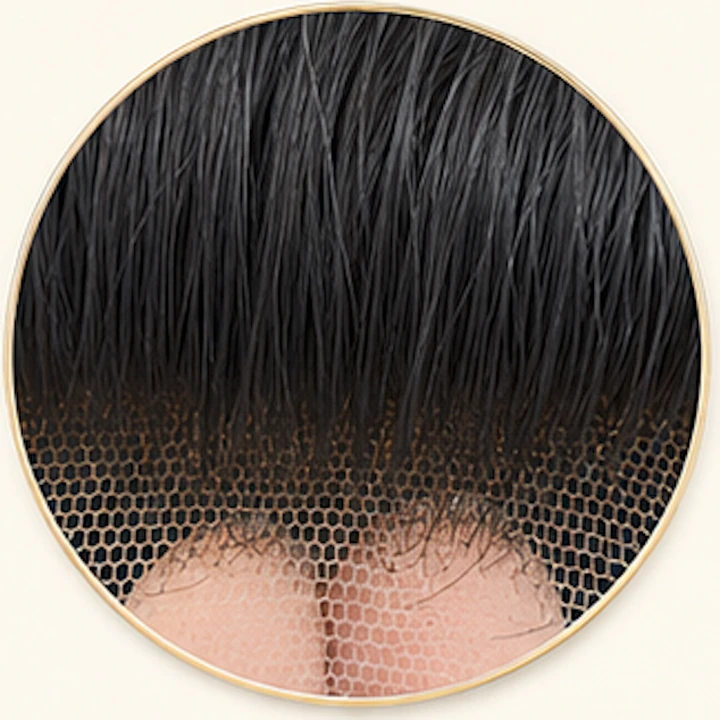
Lace can create a highly detailed front and strong airflow. Restrained to balanced density often preserves the fine visual effect.
EXPLORE LACEPoly Skin can support a clean scalp-like visual. The appropriate fullness depends on skin thickness, ventilation method, and intended styling.
EXPLORE POLY SKINCOMMON MISTAKES
Choosing maximum density because it seems more durable. Density alone does not determine system lifespan.
Ignoring the sides and back. The system should blend with the visible hair that remains.
Using one uniform density without considering a softer front transition or zone-specific requirements.
Assuming the same percentage means the same result across every supplier or base design.
NEXT STEP
Use the detailed material reference when construction and length limits need closer review.
02Compare Lace and Poly Skin before deciding how much structure and airflow you need.
03Carry the selected density direction into Custom Order and confirm it with the LHS team.
Need help choosing the right base, color, size, or density? Explore our custom ordering guide for a clearer buying path.
Email our customer care team for order support, product questions, and after-sales assistance.
Review delivery timelines, return guidance, and support information before placing your order.